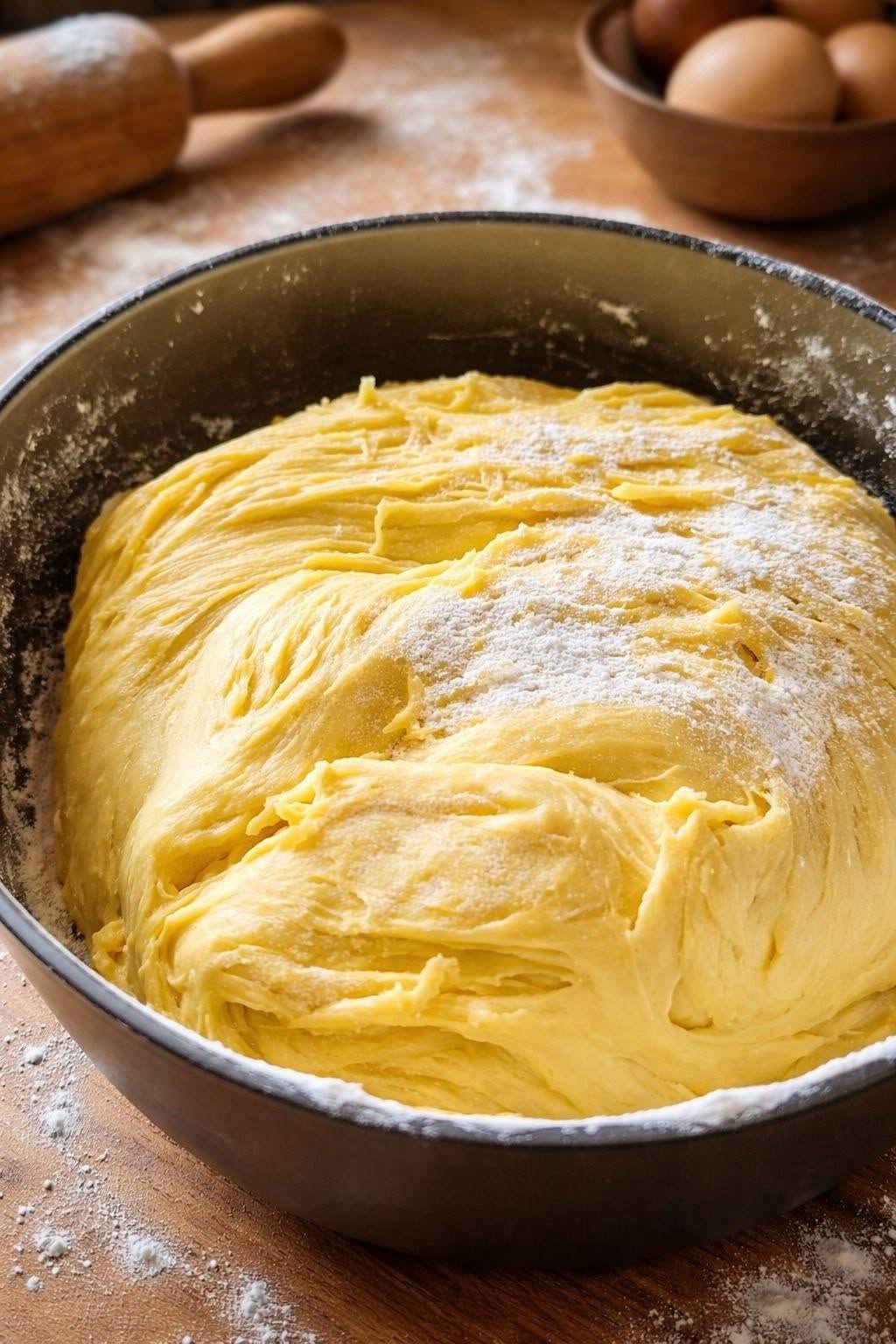
How to use homemade brioche dough?
This recipe serves as an excellent base for many different baked goods:
Braided brioche for breakfast.
Milk bread rolls for an afternoon snack.
Pull-apart brioche rolls.
Cinnamon rolls.
Chocolate-filled brioche.
Brioche wreath with candied fruit.
Small brioche buns filled with pastry cream.
Savory brioche with cheese and herbs.
Always adjust the baking time based on the size of the items: smaller rolls will bake faster than a large loaf of brioche in a pan.
Storing the dough and the brioche
Storing the raw dough
The dough can be kept in the refrigerator for about 24 hours, provided it is placed in a covered container and kept chilled. Since fermentation may continue, keep an eye on its volume to ensure it doesn’t overflow the container.
For better planning, the 4-to-12-hour resting period included in this recipe is a great option.
Storing baked brioche
Once completely cooled, place the brioche in an airtight container or a tightly sealed food bag. It will generally keep for 2 to 3 days at room temperature, in a cool, dry place.
Avoid leaving it uncovered, as it may dry out quickly.
Freezing brioche
Baked brioche freezes very well, whether whole or cut into portions. Wrap it carefully once cooled; for the best quality, consume it within 2 to 3 months.
Allow it to thaw at room temperature, then warm it for a few minutes in a low-temperature oven if you would like to restore a slightly warm crust.
Frequently Asked Questions
Why does my brioche dough remain sticky?
It is perfectly normal for the dough to be soft and slightly sticky. The dough may be under-kneaded if it fails to become elastic, but dough that is too warm can also be difficult to handle. Continue kneading if necessary, then place it in the refrigerator to make shaping easier.
Why isn’t my brioche rising?
The yeast may be inactive, the milk too hot, or the room too cold. Dough that is very rich in butter and eggs may also rise more slowly than standard bread dough. Check your yeast and allow the dough time to rise in a warm—but not overly hot—spot.
Can the dough be prepared without a stand mixer?
Yes. Kneading by hand is possible, though it requires more time and effort. Work the dough until it becomes supple and elastic, then gradually incorporate the butter. A dough scraper can be helpful for handling sticky dough.
Can I use dry yeast instead of fresh yeast?
Yes. For this recipe, use approximately 7g of dry baker’s yeast to replace 20g of fresh yeast. Follow the instructions on the packaging, as some types of dry yeast require rehydration, while others can be added directly to the flour.
Can I skip the resting period in the refrigerator?
Yes, though chilling the dough makes it easier to shape and helps develop flavor. If you are short on time, you can shape the dough after the first rise, then let it rise a second time before baking. Note that the dough will be softer and potentially stickier to work with.
Why is my brioche dry after baking?
Baking for too long, using too much flour in the dough, or insufficient kneading can all lead to a dry crumb. Follow the proportions, keep an eye on the browning, and adjust the baking time according to the size of the brioche.
Can the dough be prepared the day before?
Yes—in fact, that’s one of the advantages of this recipe. After the first rest and degassing, cover the dough and leave it in the refrigerator overnight (for up to about 24 hours). The next day, shape the dough, let it rise until well-puffed, and then bake.
Read more on the next page >>
